• Blog
  • Shelves
  • Contacto
  • Sobre
Menu

Pick a Shelf

Street Address
City, State, Zip
Phone Number

Your Custom Text Here

Pick a Shelf

  • Blog
  • Shelves
  • Contacto
  • Sobre

2018 - a review

December 26, 2018 Teresa Tomaz

I don’t usually look back on the events that took place in a particular year as it comes to a close but this time I decided to do a retrospective on 2018 regarding my favorite works in different artistic genres.

Literature

I do not usually read books the year they’re published unless they are written by an author whose work I enjoy. For that reason, I will write about the books I read in 2018, rather than those published during that year.

2018 began with the publication of “La Belle Sauvage”, the first book from “The Book of Dust” trilogy. When I was younger, “His Dark Materials”, alongside the “Earthsea” series by Ursula K. Le Guin and “Harry Potter” by J. K. Rowling, were life-changing books. I read it after the four first books of the “Harry Potter” series, and my perspective about the fantasy genre changed completely. For the first time, I read a book with a bittersweet ending and difficult themes, such as religion and philosophy, that made me really think. I was confronted with doubts and difficult and controversial characters in the sense that they could’t clearly be labeled as simply “good” or “bad”. For that reason, I was very excited when I learned that Philip Pullman was writing a new book about Lyra, the Dust and the parallel world of “His Dark Materials” trilogy. Although I enjoyed revisiting this world, it was a bit of a disappointment, mainly because its ending felt a bit rushed. Nevertheless, stood out and I cannot wait for the next books.

I also made some progress on the “Rory Gilmore Reading Challenge” (inspired by the beloved character Rory Gilmore from the TV show “Gilmore Girls”), which I originally started in 2017. This year, I read five books from this challenge, which, considering its 319 books, isn’t exactly a great rate. My favorite book from this challenge was “One Hundred Years of Solitude” by Gabriel García Márquez, one of the greatest writers from the 20th century.
This year I also completed a course on medical communication, so I read several non-fiction books regarding that theme. I had never thought I would read so many books about this particular theme and have such a great time talking about them with my colleagues on a small lecture about literature and empathy in medicine that I had the pleasure of promoting. My favorite companion regarding this topic was “What Doctors Feel: How Emotions Affect the Practice of Medicine”, by Danielle Ofri, which I have explored in this article.

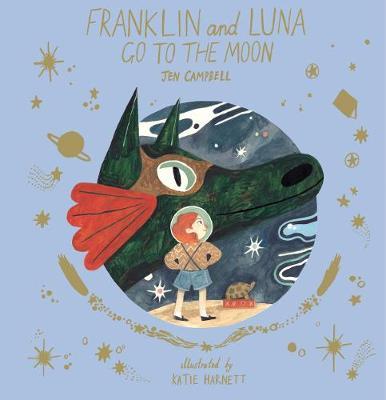
Regarding picture books, my favorites were “Franklin and Luna Go to the Moon”, the second title of the “Franklin and Luna” series written by Jen Campbell and illustrated by Katie Harnett, and “The Lion and the Bird” by Marianne Dubuc, both read in their Portuguese versions which I found at my local bookstore.

Cinema

Before revealing my favorite movie from 2018, I must start by saying that as I am writing this, I’m not taking into account movies that have yet to premiere in Portugal’s movie theaters . This includes “The Favorite” by Yorgos Lanthimos, “Shoplifters” by Hirokazu Koreeda and many others.

I loved Alfonso Cuarón when he directed the amazing and underrated movie “Children of Men”. “Children of Men” is, in my opinion, one of the best dystopian movies ever made. The direction, photography and screenplay are just phenomenal - there is so much to say about it (if you want to learn a bit more about this wonderful movie, watch this movie essay - beware of spoilers!) So I was excited when I learned he was going to direct a new movie called “Roma”.

Roma, written and directed by Alfonso Cuarón

Roma, written and directed by Alfonso Cuarón

For me, “Roma” is the greatest movie of 2018. Why? First, the movie is visually rich and compelling. The long tracking shots are just breathtaking, they will leave you both powerless and astonished. The cinematography is wonderful, an authentic piece of art, and though there is no soundtrack, the sound editing is superb. Technically speaking, it is a wonderful movie. It draws the viewer to a place and setting very different from his own and makes it easy to empathize with the characters, especially Cleo, a character based on the housekeeper who worked for Alfonso Cuarón’s family. There are violent scenes, desperate scenes, hard scenes; but the quieter ones are also astonishing, and their meditative tone is unforgettable.

TV series

I have never watched many live-action TV series - I used to watch many more anime series instead - in part due to a lack of good TV channels, something which changed after subscribing to Netflix.

One of my favorite 2018 TV series was “Maniac”. I would not recommend it to a lot of people I know, because it is a rather unconventional show. I decided to watch it for the plot and also the main leading cast: Emma Stone and Jonah Hill. It also reminded me of two other stories that I love: the anime “Kaiba” from Masaaki Yuasa, a largely unknown and underrated gem, and also “Eternal Sunshine of the Spotless Mind”, one of my all-time favorite movies. Owen and Annie are two people with many complicated issues: they both share some mental health issues, addictions and unresolved familial troubles. The show provides follows their journey as they are drawn to a pharmaceutical trial that will supposedly solve all of their problems.

Maniac, a web television miniseries that premiered on September 21, 2018, on Netflix.

Maniac, a web television miniseries that premiered on September 21, 2018, on Netflix.

The show has a strange plot, eccentric characters and even some gore and bloody scenes. But I loved how they portrayed the characters’ mental and family struggles. I also enjoyed some particular themes, such as the popular “do machines feel emotions” theme, which I initially thought might have been boring, but fortunately was proven wrong. There is psychology, philosophy and sci-fi elements. I am sure many won’t appreciate it because it is not a linear plot, and it is a surreal show. I even struggled watching some episodes because I had no idea what was happening, but eventually I started to go along with it. The original soundtrack is absolutely gorgeous, and often reminds me of Icelandic tunes and melodies. The ending episode is amazing - it made me appreciate the show even more.

But my favorite show this year was “My Brilliant Friend”. Unlike many book lovers, I usually enjoy watching movies and series based on books. I usually see these works as different concepts with the same or similar background. For instance, I love how Peter Jackson portrayed “The Lord of the Rings” story and world, but I accept he had to change many aspects, and I don’t really mind that. Obviously, there are some adaptations I cannot enjoy, but I would not like them even if I hadn’t read the book first.
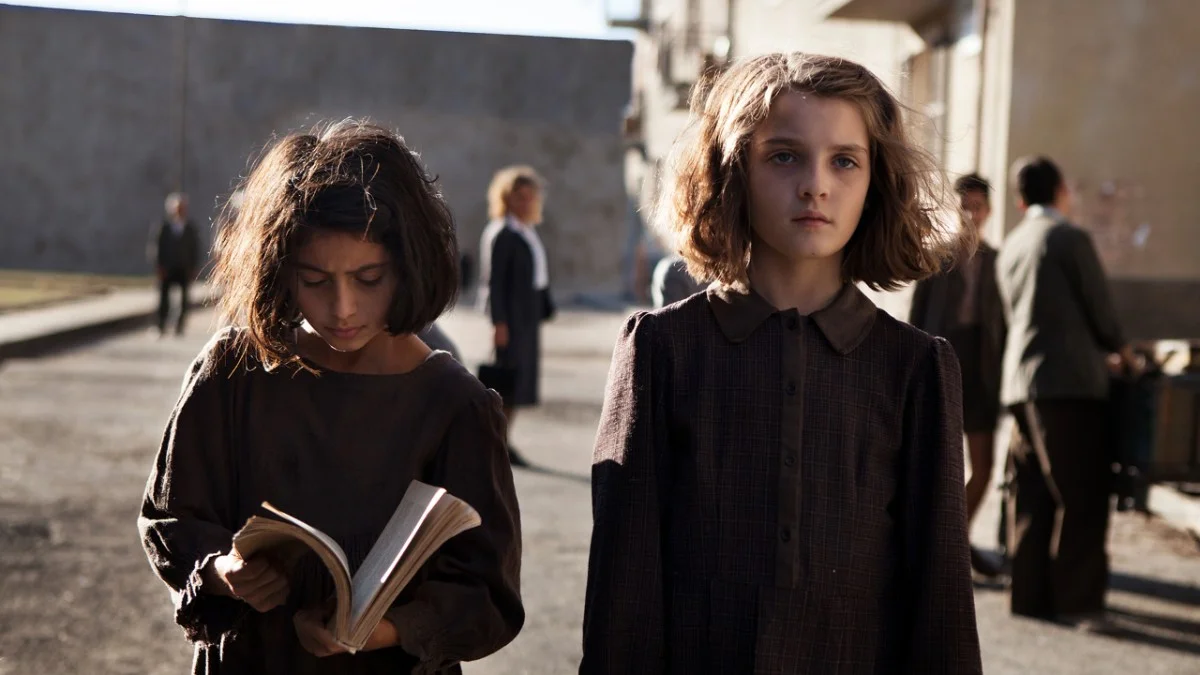
My Brilliant Friend, an Italian-American production which premiered on HBO on November 18, 2018.

My Brilliant Friend, an Italian-American production which premiered on HBO on November 18, 2018.

“My Brilliant Friend” is somewhat different, and I must confess I was a bit afraid when I learned Elena Ferrante’s books were being turned into a TV show. I think this happened because these four books had a great impact on me (I will write about that later). I didn’t know if I was going to be moved again - it is well known that Ferrante thinks she does not own her work once it is adapted by another person. An author is somehow different from their books. But I could not help wondering how they’d do it, how they’d cast Elena, Lila and the other characters.

But I immediately felt in love with “My Brilliant Friend” again. It is an Italian-American co-production between HBO, RAI and TIMvision. It is a quite different experience from reading the original novels, but I’d recommend it to everyone.

Animated TV series

I have always loved fantasy series, especially with children. This year, I watched an amazing animated series, which I profoundly loved: “Hilda”. Luke Pearson created a wonderful world that is full of magical elements and Scandinavian influences. It features not only humans, but also interesting creatures, such as giants, tiny elves who love paperwork and a funny and talkative crow.

Hilda, a British-Canadian television series which debuted on September 21, 2018 on Netflix.

Hilda, a British-Canadian television series which debuted on September 21, 2018 on Netflix.

Both children and adult viewers will certainly enjoy Hilda’s adventures and their friends stories. Also, how could you not love Twig, Hilda’s cute deerfox companion?

Regarding the anime department, 2018 wasn’t a very prolific year. Unfortunately, I have started to feel somewhat detached from the anime industry, and I find it hard to resonate with current series, which are great when it comes to special effects but lacking in story and character development. My favorite show began in 2017, but ended in 2018, when I started to watch it, so I decided to include it in this post, and it is the second season of “3-gatsu no Lion” or “March Comes In Like A Lion”.

3-gatsu no Lion, an anime television series; its second season finished airing on March 31, 2018.

3-gatsu no Lion, an anime television series; its second season finished airing on March 31, 2018.

This is a mostly unknown series, forgotten amongst the popular ones such as “Naruto”, “Attack on Titan” and so on. It is based on a manga series written by Umino Chika, who also wrote one of my favorite anime series, “Honey and Clover”. At first, I was hesitant to watch it, since it is often considered a sports show, because it follows Rei, a 17-year-old shogi player. Shogi is a strategy board game also known as Japanese chess that is the most popular chess variant in that country. I knew nothing about shogi and frankly could not care less about the game. Surprisingly, this show goes way beyond shogi; it is about a young man’s personal troubles, bullying, mental health diseases and family issues. I found it hard not to resonate with these character’s problems, even though we’re talking about different cultures and backgrounds. The animation is just breathtaking, and the story is often both healing and heartbreaking. It reminded me why I have always enjoyed watching Japanese series so much.

Music

I didn't explore many albums released in 2018, but my favorite was “Hundreds of Days” by Mary Lattimore. I didn’t know Mary Lattimore’s work until I listened her new album, and I was pleased to hear something new and different - a harpist album. Hundreds of Days is Mary Lattimore’s third solo record, and it includes many serene and quiet tracks.

It is mainly an ambient album featuring various instruments and elements, such as synthesizers, guitars and choirs echoing on the distance. Her music is full of emotion, a rare thing in a world full of pop tunes and predictable lyrics. I would recommend listening to every track back to back, maybe while traveling or staring at the window. Your thoughts will flow and you’ll see many things you had never noticed before.

On May 11 2018, a two-disc version of “The Blue Notebooks” by Max Richter was reissued. For those who don’t know him, Max Richter is a West German-born British composer with post-minimalist compositions. This album includes re-recordings, remixes and two alternate arrangements of "On the Nature of Daylight", one of Max Richter’s most famous tracks. This year, we were also gifted with a new video clip that illustrates this beautiful song, which turned out to be my favorite from 2018.

The video clip is astonishing, and so it is Elisabeth Moss’ performance. This song was used in several media formats, including movies (my favorite one would be “Arrival”), but this video clip is just breathtaking. Her breakdown always gets me, and every time I watch it I feel deeply involved and moved by Elisabeth Moss’ expression and gestures.

Regarding original soundtracks, “First Man” was an amazing work by Justin Hurwitz and also one of my favorites of 2018. “First Man” is a Neil Armstrong biopic directed by Damien Chazelle, who has previously worked with the composer Justin Hurwitz. “La La Land” was his most famous work, and it is difficult to imagine a collaboration so different from the jazzy tunes of “La La Land” or “Whiplash”.

Justin Hurwitz started to work in this soundtrack several years ago, when he was invited by Damien Chazelle to participate in the project. Ryan Gosling, the actor who portrays Neil Armstrong, found it difficult to incarnate the American astronaut and even understand him; but Justin Hurwitz literally managed to transform Armstrong’s humanity into musical compositions. It is an astonishing work, especially how he used the theremin, one of Neil Armstrong’s favorite instruments.

At last, I simply loved the “GLOW” soundtrack. “GLOW” was one of the most surprising series I watched this year, and its second season premiered on June 2018. “GLOW” revolves around a fictionalization of the characters of the Gorgeous Ladies of Wrestling (GLOW), a women’s professional wrestling promotion of the 80s. “GLOW” soundtrack features several famous songs from the 80s, so it is a great compilation for anyone who enjoys tunes from this time period.

A personal note

2018 brought me several personal challenges. I traveled alone by plane for the first time - which was a great deal for a person who is absolutely terrified of flying - and I participated in an abroad exchange project all by myself. I traveled to Madeira Island again, the place where my flying phobia started. I finally bought my dream trip to Japan, which I’ll visit in 2019.

I completed a post-graduate course in Clinical Communication and applied for a Master Program regarding that theme. I went to a Postcrossing meeting for the first time with a friend and completed 8 years of sending and receiving postcards. I watched several dear friends get married. I bought a bicycle. I watched Nick Cave playing live and went to a music festival for the fourth time with the same friends, thus creating a solid tradition (and with its fifth iteration already planned). We lost Ursula K. Le Guin in 2018.

And I created this blog, which was also a highlight of 2018.

Do you have any personal achievements or cultural highlights regarding 2018 that you would like to share? Feel free to do so in the comments below.

Tags 2018, literature, music, cinema, tv series, animated series
Comment

On depression - five books that portray living with mental illness

December 17, 2018 Teresa Tomaz
depression-1.jpg

There are words that we find common. We hear them almost everyday and often start to devalue them. For the last years, the word “depression” started to seem an ordinary word, just as “food” or “sleep”. If we think about it, we use it everywhere and every-time: we are depressed because we had a bad day, we are depressed because our favorite sports team lost a match. We are depressed because we are momentously sad. 

I first acknowledged the true meaning of the word “depression” when I was fourteen years old and one of my closest relatives was diagnosed with major depressive disorder and anxiety disorder. I cannot recall exactly what happened then, but I clearly remember what followed in subsequent years. Later, this person was diagnosed with psychotic depression, a severe form of depression where people experience the common symptoms of depression, plus delusions and hallucinations. Her depression was severe, and she would also have intrusive and morbid thoughts which scared her. 

I want to say that I fully understood her pain and always remained calm by her side. However, I would be lying. Although I always tried to be supportive, I would lose my temper whenever she didn’t want to take her medications and I rarely asked why she didn’t. I assumed she had to endure the terrible nausea and dizziness associated with her medication. I would shout if she said she didn’t want to gain weight again. I would sigh if she called me and said she had seen a new psychiatrist again. I rarely actively listened. Instead, I would tell her “you have to be strong, this is not the end of the world.”

But what does that mean? And what if it really was the end of her world?

Despite thinking for a long time that I was a horrible person, I now understand I was worried about her and simply didn’t know how to deal with her disease. I was afraid of losing her, of slowly watching her wither away. For almost 15 years, I was by her side as she cried, was hospitalized and had mood swings. It was difficult understanding she was not being stubborn or pessimistic but rather that she was sick. Even now, after treating and caring for so many different people with this disease, I have to actively remind myself that this person is just like those patients.

Being understanding and empathetic with people who suffer from mental diseases is not an easy task, especially for those closest to them. I only understood that when my relative went through the darkest period of her life. For that reason, I decided to write an article about books that address depression and some mental diseases that feature depressive episodes or symptoms. Professional books about these topics abound in libraries, but I will only talk about specific books that I found important in helping me understand people who suffer from this mental illness.

Portuguese cover of The Bell Jar (A Campânula de Vidro)

Portuguese cover of The Bell Jar (A Campânula de Vidro)

Several authors addressed depression in their works: Virginia Woolf, Andrew Solomon, and David Foster Wallace are some popular examples. But Sylvia Plath's experience of depression is so deeply a part of her work that it's hard not to mention her. “The Bell Jar” is a novel that  perfectly describes a patient’s experience with depression. We follow the main character’s struggles and her descending path through the disease, which ultimately lead to her hospitalization in a psychiatry yard. The novel itself is a semi-autobiographical book, because the protagonist's descent into mental illness parallels Sylvia Plath’s, an American novelist and poet who experienced serious depression symptoms.

I find some aspects of this book of great importance. First, it helps us understand how depression symptoms start and also the importance of some risk factors, such as lack of support and adverse life events. Esther, the main character of this book, often tells us about her sense of inadequacy and hopelessness. She starts to lose her focus, which eventually prevents her from fulfilling her interests and plans of writing a novel. She describes how she felt oppressed and deeply affected by her disease. One of the most beautiful paragraphs in this book shows exactly what depression may do:

If Mrs. Guinea had given me a ticket to Europe, or a round-the-world cruise, it wouldn't have made one scrap of difference to me, because wherever I sat – on the deck of a ship or at a street cafe in Paris or Bangkok – I would be sitting under the same glass bell jar, stewing in my own sour air. ― The Bell Jar, Sylvia Plath

Sylvia Plath uses the bell jar as a symbol to capture how Esther felt trapped and isolated from the rest of the world. People often think they can just cheer up someone by buying them stuff and stating “don’t be sad”. Although supporting people with mental diseases is a crucial aspect of the treatment, it is also important to understand that sometimes depression is so severe that people won’t be able to appreciate and enjoy these things until they are medically treated. Sylvia Plath addresses some condescending attitudes  and disbeliefs regarding her disease, especially her mother:

My mother smiled. “I knew my baby girl wasn’t like that.”

I looked at her. “Like what?”

“Like those awful people. Those awful dead people at that hospital.” She paused. “I knew you’d decide to be all right again.

― The Bell Jar, Sylvia Plath

Another important aspect of this book is Esther’s experiences with doctors and several treatments. Esther eventually sees a psychiatrist called Dr Gordon. She immediately feels he is not interested in her as a person, and he often makes pointless comments. Under Dr Gordon’s care, Esther receives electroconvulsive therapy, also known as ECT. Nowadays, ECT is a safe procedure, done under anesthesia, which can be very helpful especially in treatment-resistant depression. In this book, Sylvia Plath describes ECT as a painful procedure, which might be explained because it used to be administered without anesthesia, leading to serious side effects. More than the stigma attached to ECT or how painful it was, I was startled by how no one told Esther about this treatment, its side effects and how it was done. “The Bell Jar” shows just how poorly healthcare professionals and mental patients communicated. Fortunately, she receives better treatments and care by another consultant called Dr Nolan, a female psychiatrist who treats her with respect. 

Sylvia Plath

Sylvia Plath

Besides the social criticism present in this book, “The Bell Jar” is an essential work in understanding how a patient’s point of view about depression and its treatments are essential to recovery. Unfortunately, Sylvia Plath did not escape the fate that Esther fears by the end of the novel, when she wonders about her future after being discharged from the hospital, wondering if the bell jar would descend upon her again.

“The Bell Jar” is an important book which portraits many crucial aspects of depression. Moreover, I always find personal memoirs useful in understanding people’s points of view and experiences with mental diseases. 

depression-2.jpg

In the last years, we have been following many famous people struggling with depression and mental diseases. In fact, almost every year we hear in the news that a famous actor / singer / artist died by suicide. Usually, these news strike us and leave us in disbelief. How could someone as funny as Robin Williams do that? How could someone as talented as Chris Cornell die by suicide? It seems incomprehensible that a famous and rich person would take his or her life. And when we hear they were deeply depressed, we are astonished: they seemed so happy, they had everything we will never have. How can such a disease do that?

William Styron was an American novelist. He wrote “Sophie’s Choice” and “Lie Down in Darkness” and won many literary awards for his work. He was married, had a big family and a successful life and career. It might seem odd that Styron would suffer from a severe depression, which almost cost his life. Why?, would someone wonder. Why would Styron feel so depressed that he would isolate himself and attempt to commit suicide?

In “Darkness Visible: A Memoir of Madness”, William Styron addresses some of these questions. But above all, Styron explains he does not have a simple answer for them. This is a small but powerful book that portraits Styron’s journey through depression, his inability to comprehend his disease and its profound impact on his life. Before experiencing depression symptoms himself, William Styron could not understand how someone would not recover from this “state of mind”, as he says. He adds:

“Romain told me that Jean was being treated for the disorder that afflicted him, and mentioned something about antidepressant medications, but none of this registered very strongly, and also meant little. This memory of my relative indifference demonstrates powerfully the outsider’s inability to grasp the essence of the illness. Camus’s depression and now Romain Gary’s - and certainly Jean’s - were abstract ailments to me, in spite of my sympathy, and I hadn’t an inkling of its true contours or the nature of the pain so many victims experience as the mind continues in its insidious meltdown.” ― Darkness Visible, William Styron

Note the use of “sympathy” instead of “empathy”. In fact, these are different concepts, which might help us understanding Styron’s words. Styron felt sorry for his friend (sympathy), but could not fully understand him. He could not imagine his pain, nor his wife’s (empathy). As he also states: “but even then I was unable to comprehend the nature of his anguish.” He also explains that the inability of healthy people to imagine “a form of torment so alien to everyday experience” might be the reason why it is so difficult for a regular person to understand someone who suffers from depression.

“Darkness Visible” - first page

“Darkness Visible” - first page

Later, he would experience the same pain. His words helps us to understand how impactful his depression was, preventing him from enjoying parties, prize awards and social gatherings. His words even resemble Sylvia Path’s regarding her bell jar: “For myself, the pain is most closely connected to drowning or suffocation.”

“Darkness Visible” is an essential memoir who shows the progress of untreated depression, but also the recovery that medical treatment can sometimes provid. Styron talks about psychotherapy and medical treatment, and how important their combination is to recovery. This is also addressed in another important memoir called “Un Unquiet Mind: a Memoir of Moods and Madness”, one of my favorite books about depression and bipolar disorder. 

depression-4.jpg

This is a somewhat different book, since it follows Kay Redfield Jamison’s experiences with bipolar illness. Formerly called manic depression or manic-depressive illness, bipolar disorder is defined by depressive and maniac episodes or symptoms. Dr Kay Redfield Jamison was diagnosed with type I bipolar disorder, in which patients experience manic episodes and nearly always major depressive episodes. A maniac episode is marked by an unusually good or high mood, which may be accompanied by expansiveness, disinhibition (for instance, wearing garish clothes or disrobing in public), increased energy and a sense of wellbeing and self-confidence. As it might seem, it is a devastating disease because patients often struggle to maintain employment and interpersonal relationships, as it frequently disrupts mood, energy, activity, sleep, cognition, and behavior:

“It took me far too long to realize that lost years and relationships cannot be recovered. That damage done to oneself and others cannot always be put right again.” ― An Unquiet Mind, Kay Redfield Jamison

The author tells us about her unique experiences regarding her maniac episodes, but also her devastating and serious depressive ones. She presents an unique perspective both as a patient and a clinical psychologist whose work is focused in this disease. It is a helpful and singular view, because she experienced many doubts and barriers across her life: the social stigma of having a mental disease, the resistance she offered being medicated and also the despair and fear she felt about losing control of herself. 

An Unquiet Mind, by Kay Redfield Jamison

An Unquiet Mind, by Kay Redfield Jamison

Many people are afraid of taking medications for mental illnesses, and depression is no exception. Everyday, I face many concerns about side effects of antidepressants. People often fear they’ll have to take their pills forever and become “addicted” to them. Dr Jamison also addresses these concerns, as she felt them too. After her diagnosis, she took her prescribed medications reluctantly. But eventually she began understanding the importance of antidepressants and also psychoteraphy:

“No pill can help me deal with the problem of not wanting to take pills; likewise, no amount of psychotherapy alone can prevent my manias and depressions. I need both. It is an odd thing, owing life to pills, one's own quirks and tenacities, and this unique, strange, and ultimately profound relationship called psychotherapy.” ― An Unquiet Mind, Kay Redfield Jamison

She explains major depression is an illness as any other, stating it should be considered “malpractice to treat it without medication”, but also highlights the role of an understanding doctor in tackling these issue in a partnership with the patient.

I think picture books are amazing, not only for children, but also for every adult who loves to read. One of my favorite picture books was written by a Portuguese author called Joana Estrela. Unfortunately, you won’t be able to find it in english, but I will recommend it anyway, hoping someday you’ll have an English translation.

“A Rainha do Norte” (“The Queen of the North”) is a recreation of a popular Portuguese legend called “Legend of the Almond Trees”. In this legend, a young prince met and married a Nordic princess. They lived in Portugal, an European country with a sunny and warm weather. As time went by, the princess began missing her hometown, especially the snow. She yearned for the snow covered mountains, the cold weather and everything that reminded her home. Her prince was saddened to see his wife pining away and tried everything in his power to make her happy - including jewels and presents - but still her heart ached. He eventually came up with a plan, which involved almond trees - but I won’t reveal too much. 

In Joana Estrela’s book, the story is similar, but instead of giving the queen presents, the king decided to bring some famous doctors in order to cure her. Unfortunately, no one could do anything for her strange illness, as they could not understand why she was so sad. She started to get worse, and eventually she even refused to eat and exit her room. The doctors gave her a bunch of random treatments, but nothing worked.

ardn2.jpg

“The Queen of the North” is a beautiful book which shows us that sometimes is difficult to understand someone’s pain. We have to put ourselves in their shoes in order to understand and help them. In this story, a man eventually arrives at the kingdom and talks to the queen. He listens to her, showing an empathic attitude, and finally understands the reason why the queen was feeling so depressed. He explains everything to the king, and with his support, the queen slowly begins to improve.

This is a wonderful small book which portraits how depression may have a huge impact in someone’s life. It also proves how sometimes depression is hard to understand by everyone around us. Although everyone has heard about it, no one is fully prepared to help someone who struggles with this diagnosis. I wasn’t prepared for doing that when I was younger, and even today I have to remind myself that my relative isn’t being stubborn or reckless. She is struggling with a powerful and strong disease. And although I am an healthcare professional, although I have studied depression and its symptoms, sometimes it is very hard for me - as it is for her - to understand and help her. Getting professional help is also important for people who support someone with depression, because support is a crucial aspect of depression’s treatment. 

At last, there is “Micheal Rosen’s Sad Book”. Every time I read this beautiful picture book I cannot help but feel a great sense of bittersweetness. This is a somehow different work, as it talks about depressive symptoms that followed the death of his son Eddie. But besides grief, it tells us about sadness: 

“Sad is a place 

that is deep and dark

like the space under the bed”

― Micheal Rosen’s Sad Book, Micheal Rosen

The main reason why I love “Micheal Rosen’s Sad Book” so much is because he tells us about so many important things in just a few pages and in few words. He tells us about his strategies to escape his negative thoughts, about loss and grief, about being sad and confused, angry and happy. He shows us that even in our darkest periods we are allowed to have happy thoughts without having to feel guilty. 

All of these superb books are amazing vehicles for better understanding how someone with depression feels. I’m sharing them in the hope that they’ll help you cope with the mental health issues faced either by yourself or by someone you care about.

If you have any other book suggestions, feel free to use the comment section below.


Tags depression, medicine, picture book, memoir, nonfiction
Comment
← Newer Posts Older Posts →

Powered by Squarespace